
Hi there, dreamers and deep thinkers,
Imagine standing in line, sleeves rolled up, waiting for a doctor to take fluid from the blister of the child in front of you—and then scrape it into your own skin. Not a metaphor. Not a horror story. This was medicine in the 1800s. It was called the arm-to-arm vaccination method, and for decades it was the main way humanity spread protection against smallpox.
A Human Conveyor Belt of Immunity
When Edward Jenner’s cowpox vaccine arrived in 1796, it was revolutionary—but fragile. The vaccine couldn’t survive long in bottles or vials. To keep it “alive,” doctors used the only incubator available: the human body.
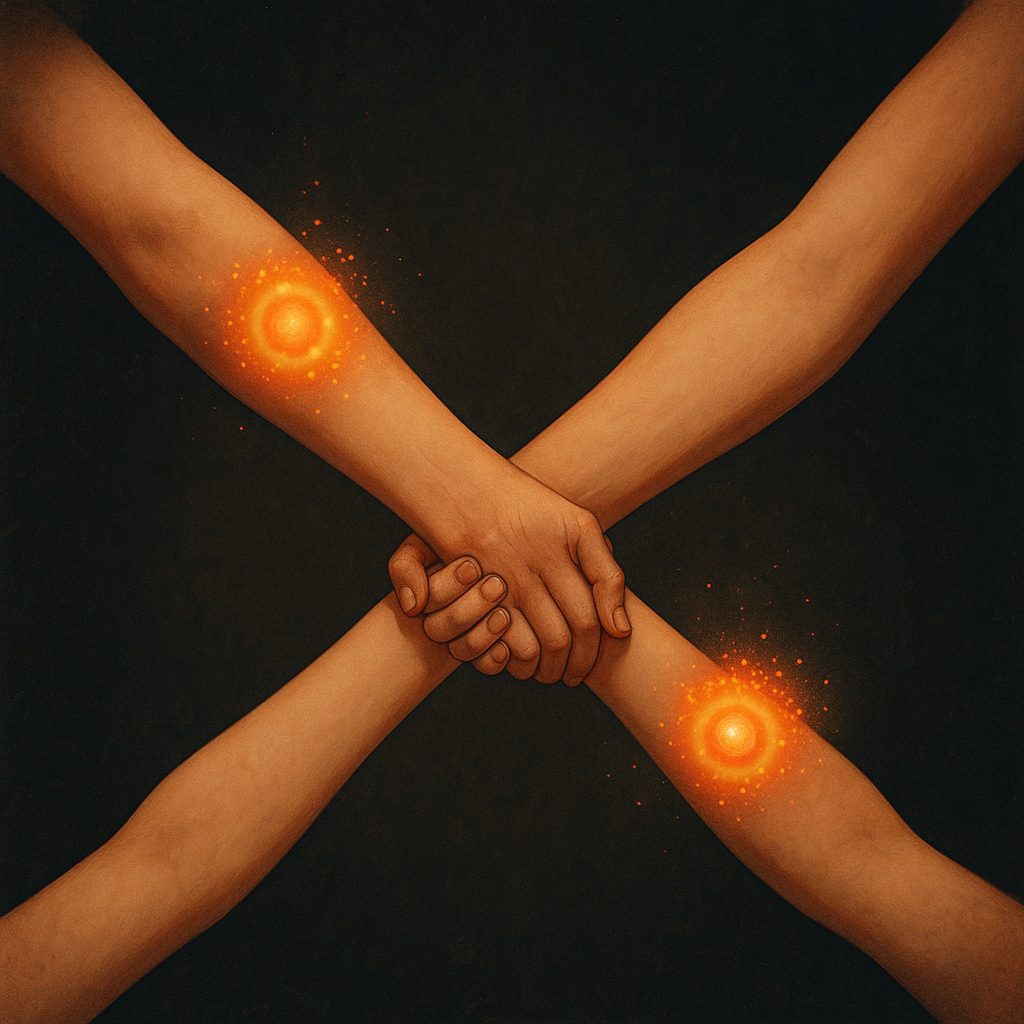
Here’s how it worked: fluid from a freshly vaccinated person’s blister was transferred directly into small cuts on the next person’s arm. That person developed a blister, which was then harvested for the next, and the cycle repeated. In some cases, entire groups of children were lined up like living vessels, passing immunity down the chain.
It wasn’t fringe medicine—it was official. Governments endorsed it. Nations built vaccination campaigns around it. In Britain, by the 1850s, vaccination was not only encouraged but required by law. Parents who refused could face fines or imprisonment.
The Risk Beneath the Cure
Here’s the unsettling part: arm-to-arm vaccination didn’t just carry cowpox lymph. It could—and often did—carry whatever else was in the donor’s blood.
- Syphilis outbreaks were traced back to vaccination chains.
- Other infections like tuberculosis and hepatitis could ride along.
- Doctors knew the risks but had few alternatives.
Think about that: society decided that preventing smallpox (which killed about one in three people who caught it) was worth the gamble of potentially contracting another serious disease. It was the classic 19th-century public health tradeoff—a strange blend of progress and peril.
The Human Cost of Public Health
In one of the most striking cases, Spain’s Royal Philanthropic Vaccine Expedition (1803) carried Jenner’s vaccine across the ocean by using 22 orphaned children. The boys were vaccinated in pairs, and as one developed blisters, the fluid was taken to inoculate the next pair. These children were, quite literally, the vessels that delivered smallpox immunity to the Americas and Asia.
There’s something haunting in that image: children used as carriers of salvation, yet also as carriers of risk.
When Science Outgrew the Chain
By the 1870s, the arm-to-arm method was giving way to a new technique: calf lymph production. Instead of passing the vaccine through human arms, it was produced under more controlled conditions using calves. This not only reduced the risk of blood-borne infections but also made vaccine supplies more reliable.
Still, the legacy of arm-to-arm vaccination lingers. It shows us how desperate, inventive, and sometimes reckless humanity can be when fighting disease.
A Strange Reflection
Looking back, it’s almost unthinkable that governments mandated a procedure that could infect you with something as devastating as syphilis. And yet, in their world, it was progress—a gamble weighed against the certainty of smallpox death.
It makes me wonder: how often do we, today, accept risks in the name of public health, technology, or safety without fully questioning them? How often does “the greater good” blur into something strange, even unsettling?
Maybe history is less about how far we’ve come, and more about how often we’re willing to gamble with each other’s bodies in the pursuit of survival.
Stay curious,
April
A Deeper Dive on Vaccinations:
The Birth of Vaccination
- 1796: Edward Jenner’s famous experiment using cowpox to protect against smallpox marked the beginning of vaccination. He noticed milkmaids who caught cowpox (a mild disease) didn’t contract deadly smallpox.
- 1800s: Jenner’s method spread across Europe and the Americas. By the early 19th century, vaccination programs were being carried out in cities and even rural areas.
Vaccination Campaigns in the 1800s
- Early Smallpox Campaigns
- Governments quickly saw vaccination as a public good. Napoleon Bonaparte, for example, vaccinated his troops in the early 1800s.
- In the U.S., Thomas Jefferson supported vaccination, and by the 1810s–20s, physicians across the country were offering it.
- Compulsory Vaccination Laws
- Britain passed the Vaccination Act of 1853, requiring infants to be vaccinated against smallpox.
- The law was expanded in 1867 to cover children up to age 14. Parents could be fined or imprisoned if they refused.
- These laws sparked the Anti-Vaccination Movement, one of the first organized public health resistance groups.
- Global Spread
- Colonial empires spread vaccination across their territories. Campaigns reached India, Africa, and parts of Asia, though often unevenly and sometimes violently.
- In Latin America, after independence movements, many countries set up smallpox vaccination boards or commissions.
- Public Health Infrastructure
- Vaccination campaigns pushed governments to create new systems: registries of births and vaccinations, boards of health, and trained vaccinators.
- By the late 19th century, vaccination was one of the first widespread examples of state-managed health policy.
Controversy & Opposition
- Religious and Moral Concerns: Some opposed vaccination because it involved using material from cows, which they saw as unnatural or unclean.
- Liberty Arguments: Others objected to compulsory vaccination as government overreach — a debate still echoed today.
- Safety Issues: Vaccination was not without risk. Early techniques sometimes spread other infections due to poor sanitation (like syphilis through contaminated lancets). This fed distrust.
Later 19th Century Advances
- Revaccination: It was discovered that protection waned over time, leading to repeat campaigns.
- Improved Methods: By the 1870s, vaccine production shifted from arm-to-arm transfer (using lymph from a vaccinated person) to animal-based production (using calves), which was safer.
- Other Vaccines: Toward the end of the century, Louis Pasteur’s work expanded vaccination beyond smallpox, developing vaccines for rabies (1885), anthrax (1881), and chicken cholera.
A Deeper Dive on Arm-to-arm Vaccinations
The arm-to-arm vaccination method was one of the most distinctive (and controversial) practices of the 19th century. It was widely used before more controlled vaccine production methods were developed. Here’s how it worked and when it was used:
What Was the Arm-to-Arm Method?
- Process: A physician or vaccinator would take lymph (fluid from the blister caused by the smallpox vaccine) from a recently vaccinated person’s arm. This fluid was then immediately transferred into small scratches or punctures on another person’s arm.
- Chain Transmission: To keep the vaccine viable, practitioners would repeat this process from one child (or adult) to another, creating a living “chain” of vaccine material. Sometimes entire lines of children were used to carry the vaccine over long distances.
- Reason: The smallpox vaccine (cowpox lymph) was biologically unstable. It couldn’t be stored or transported easily in the early 1800s, so keeping it “alive” in human bodies was the most reliable method.
When and Where Was It Used
- Early 1800s (1800–1860s): Arm-to-arm vaccination was the dominant method worldwide. It was used in Europe, the Americas, Asia, and Africa as vaccination spread after Jenner.
- Spanish Royal Philanthropic Vaccine Expedition (1803–1810): One of the most famous uses — a ship carried 22 orphaned children across the Atlantic, passing the vaccine arm-to-arm to preserve it on the voyage to Spanish colonies in the Americas and the Philippines.
- Britain and the U.S.: Local physicians and public vaccinators used it extensively until mid-century. Public health boards often maintained “vaccination stations” where children were lined up for sequential inoculation.
- Decline (1870s onward): With the development of animal-based vaccine production (using calves to harvest lymph in sterile conditions), the arm-to-arm method declined sharply. It remained in some poorer or remote areas into the early 20th century.
Problems and Risks
- Disease Transmission: Using human lymph could spread other illnesses, including syphilis, hepatitis, and tuberculosis. Several notorious outbreaks fueled public fear and anti-vaccination sentiment.
- Quality Control Issues: Vaccine strength could weaken as it passed through many arms, or become contaminated.
- Ethical Concerns: Using children as “vaccine carriers” — sometimes orphans or the poor — raised moral and social questions.
Significance
Despite its flaws, the arm-to-arm method was essential in the first global rollout of vaccination. Without it, smallpox immunization could not have spread across continents as quickly as it did in the early 1800s. It was a bridge method — messy and risky, but it kept Jenner’s discovery alive until modern production methods emerged.


